Tank or Tankless Water Heater: What to Ask Before You Choose
The right water heater depends on your house and your habits, not on whichever unit happens to be on the truck that day.
September 22, 2026 · 3 min read
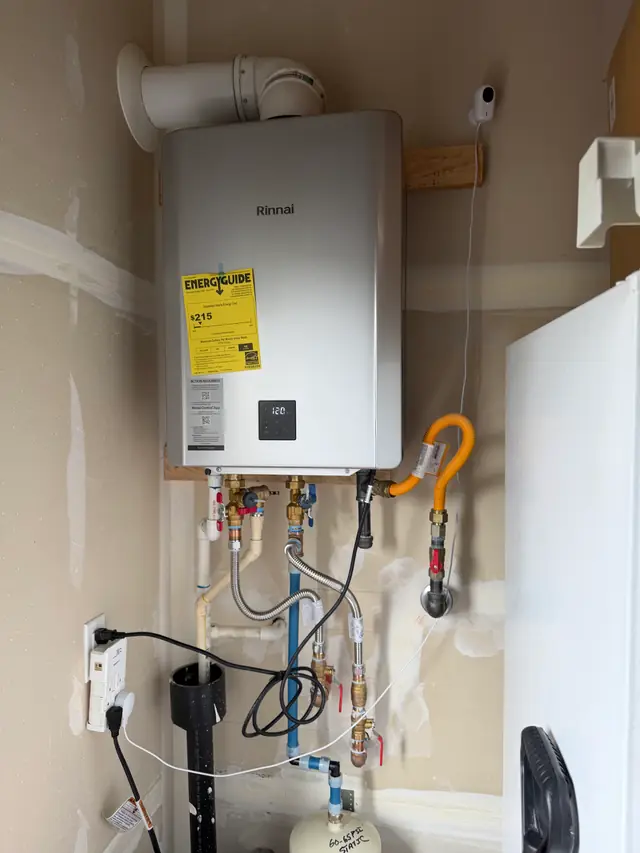
Sooner or later almost every homeowner ends up staring at a water heater aisle, or more likely listening to a plumber's recommendation, trying to decide between a traditional tank and a tankless unit. Both do the same basic job, but they get there differently, and the right choice depends more on how your household actually uses hot water than on which one sounds more modern.
How Much Hot Water Do You Actually Use at Once?
A tank water heater stores a set amount of hot water, usually somewhere between 40 and 50 gallons for a typical home, and heats it in advance so it's ready when you turn on the tap. That works well for households with fairly predictable hot water use spread through the day. A tankless unit heats water on demand as it flows through, so it doesn't run out the way a tank can when three showers happen back to back, but it also has a maximum flow rate, so running a shower and the dishwasher and a load of laundry all at once can still stretch it thin. Ask what your household's actual peak demand looks like, not just its average day.
What Does the Install Actually Involve?
Swapping a tank for another tank is usually a straightforward replacement. Going from a tank to tankless is a bigger job. Tankless units often need larger gas lines to deliver enough fuel for the higher instantaneous demand, different venting, and sometimes electrical work for the unit's controls. None of that makes tankless a bad choice, it's a real, proven technology. It does mean the honest cost of labor depends on what's already in your walls, and it's worth having a plumber actually look at your setup before you commit to one path or the other.
Fuel Type and Available Space
A traditional tank needs real floor space, usually a closet, garage corner, or utility room, since the tank itself is a few feet tall and wide. A tankless unit mounts flat on a wall and frees up that floor space entirely, which matters a lot in a smaller utility closet or a garage that's already tight. Fuel type matters too. Gas units, tank or tankless, generally recover or deliver hot water faster than electric ones, but they need proper venting to the outside, which is a bigger consideration in a tankless retrofit than a straight tank swap. Electric units skip the venting question but draw more on your electrical panel, especially a tankless electric unit, which can need a dedicated high amperage circuit. None of these are wrong answers, they're just the trade offs worth understanding before you decide.
Ask About Long Term Upkeep, Not Just the Install
Tank units are simple and forgiving, but sediment builds up in the bottom of the tank over time, especially with harder water, and that's worth understanding as part of ownership rather than a surprise later. Tankless units have their own upkeep needs around the heat exchanger. Ask whatever plumber you're talking to what maintenance looks like for the specific unit they're recommending, not water heaters in general, since brands and models vary.
Why You Should Pick the Model Yourself
One thing we hear a lot from customers is that other companies show up and just install whatever's on the truck that day, sometimes pushing a specific brand hard regardless of fit. That's not how we do it. When we install a water heater, tank or tankless, we lay out the real options and let the homeowner make the call, whether that ends up being a Rinnai tankless unit or a Bradford White tank system. One customer told us flat out that we didn't push a model on them and simply let them pick, which is exactly the point. It's your house and your money; you should be the one deciding what goes in it.
Getting a Straight Answer
If you're trying to figure out whether tank or tankless makes sense for your house in Maple Valley, Kent, Renton, Bellevue, or Seattle, Cahill's Plumbing & Heating will walk through your actual usage and your existing gas and electrical setup, then give you a free estimate before any work begins. Call (425) 432-1977 and we'll talk through it honestly, no flat rate script, just what actually fits your home.
- How many people and fixtures need hot water at the same time
- What your existing gas line, venting, and electrical setup can support
- What ongoing maintenance the specific model actually needs
- Whether the plumber is letting you choose the brand and model or just installing what's on the truck
Cahill's Plumbing & Heating, (425) 432-1977
Call (425) 432-1977More articles
What to Do in the First Ten Minutes of a Burst Pipe
Water damage gets worse by the minute, but a few calm steps in the right order can keep a bad afternoon from turning into a bad month.
Why a Water Line Leaks Between the Meter and the House
The line running from your meter to your house does its work out of sight, and when it fails, finding the leak matters more than guessing at it.