Leak detection · Maple Valley, WA
Finding a leak before it finds your foundation
A water line that won't show itself on the surface still runs up the bill and softens the ground above it. We find it before anyone digs, then dig once and put the yard back.
Chapter 01
What a hidden leak looks like before you can see it
A leak that shows itself is the easy kind. Water on the floor, a stain spreading across the ceiling, a puddle collecting by the water heater. Those get a call the same day. The harder kind runs quietly between the water meter and the house, or behind a wall, or under a slab, and the only signs are things a homeowner has to notice on purpose: a water bill climbing with nothing new to explain it, a patch of yard that stays soft and green longer than the rest of the lawn even through a dry stretch, or the meter dial still turning after every fixture in the house has been shut off.
Around Maple Valley, the most common version is a water-line leak between the meter and the house, since older copper and galvanized lines shift as the ground settles and eventually pinhole or split at a joint. Slab and wall leaks happen too, and they tend to show up as a warm patch on a concrete floor near a hot-water line, or drywall that stays damp no matter how many times it gets wiped down. None of these are urgent the way a burst pipe is, but none of them get better sitting there either, and a line that's been leaking for months usually costs more in wasted water than the repair itself.
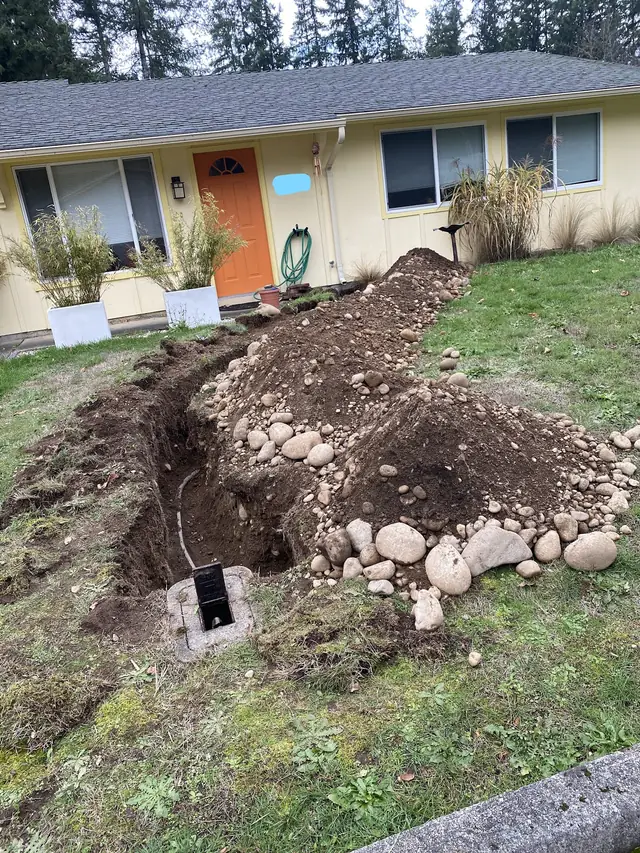
A Cahill's trench cut across a Maple Valley front yard to reach a leaking water line
Locating it before anyone touches a shovel
The instinct with a leak nobody can see is to start digging wherever the ground looks worst, which usually means digging in the wrong spot first and the right one second. The line gets traced to the point where it's actually failing before any ground gets opened, instead of guessing off a wet patch and hoping.
That's what happened on one water-line leak in Maple Valley: a homeowner called about water showing up somewhere between the meter and the house, and a Cahill's plumber was out within the hour of that first call, walking through what it likely was and what would happen next. By the next day, the exact point of the leak along that line had been located. By the third day, a single trench had been dug straight to it, the pipe repaired, and the trench filled back in.
One trench, not a yard turned into a construction site for a week. That's the difference between locating a leak first and just digging until something turns up.
Chapter 03
What the yard looks like once it's done
Once a trench is filled and tamped back down, the yard should look close to how it did before anyone came out to dig. On that Maple Valley water-line repair, the ground was smoothed back over so cleanly the homeowner said afterward you could barely tell where the trench had ever been.
For a week or two after a repair, it's worth checking the meter the same way the leak first got noticed: shut off every fixture in the house and watch whether the dial still moves. It's also worth keeping an eye on the next water bill, since a repaired line should bring it back down close to where it sat before the leak started. Freshly disturbed ground can settle a little after a hard rain, so a shallow dip along the repair line in the following month is normal. Anything wetter than that, or a bill that hasn't come back down, is worth a call back.
The same logic applies to a leak inside the house rather than out in the yard. A slab or wall leak that's been repaired should mean the warm patch on the floor cools off and the damp spot on the drywall finally dries out for good over the following week. If either one comes back, that's worth a second look rather than a guess.
One Maple Valley water-line leak was located the day after the first call and repaired and backfilled by day three. Call (425) 432-1977 for a leak that isn't showing itself yet.